Presentations
IP Showcase on the Water
To view a presentation, simply click on the schedule and a pop up will appear.
Presentation Schedule
Ian Cobb, Alpha
This session explores how ST 2110 deployments have matured and where challenges remain. Drawing from real-world experience, it covers practical strategies for network design, team alignment, and navigating organizational dynamics. Learn how to set projects up for success by addressing both technical factors and the people behind the systems.
Gus Marcondes, Netgear
Drawing from extensive field experience and its dedicated ST 2110 training program, NETGEAR will share guidance for building IPMX-only networks and also hybrid environments requiring precise timing, QoS, and traffic segmentation. This session will cover topology planning, clocking strategies, multicast management, and other key infrastructure considerations for converged media networks.
Spencer Deame, Nextera Video
We know NMOS as the control system for SMPTE ST 2110 and IPMX, but it may not be clear to all how far it has evolved. We will review the latest updates in NMOS, including new codecs, stream compatibility, security, support for IPMX, and the evolution into device control.
Rob Moodey, Matrox Video
• End user surveys show that ‘interoperability issues between vendors’ is crucial and holding back their progress in digital transformation
• Surveys of distributor/resellers indicate that ‘end users are not interested in interoperability’ (“users never ask for it” they assert)
Two results that are seemingly, and surprisingly, diametrically opposed.
IPMX related developments open the way to
• Easier connection between diverse elements of the technology fleet – including autonomous (unstaffed) equipments.
• Easier connection between different user groups within the same organisation.
This session explores why interoperability matters, as IP succeeds baseband as the primary connectivity in the era of the broadcast-AV application.
Why do high-end users want network interoperability (e.g., between ST2110 and non-ST2110)?
What are the benefits of device interoperability via the network interface (particularly inter-brand device compatibility)?
Who is affected by these benefits?
Who doesn’t want interoperability? And why? And what would change their minds?
Andreas Hildebrand, Lawo
Come aboard our boat, enjoy flowing through the Amsterdam Canal network and look forward to reaching our destination just in time! About flows, channels, synchronization and alignment in AES67, ST2110 and IPMX.
Willem Vermost, EBU
Rapid computing and networking advances are driving a shift from hardware-centric to software-defined live media production. The DMF initiative proposes a containerized architecture with modular media functions and a Media Exchange Layer for interoperability. Supported by major industry bodies, its SDK promotes open standards for flexible, scalable, and future-proof broadcast workflows.
John Mailhot, Imagine Communications
Much attention is being focused on the low-layer connectivity of software media processing through the EBU/DMF/MXL project. But dynamic construction of software-based media workflows involves other challenges too – organizing the ingress and egress connectivity, deploying the workflow elements onto hosts that can accommodate them, and constructing and connecting the management interdependencies to connect content, metadata, and control flows to the deployed elements. For maximum benefits, this all needs to be done in an operational context and with high reliability. Ansible, Kubernetes, and other common IT tools play a part, while some functions are quite unique to the television use case.
Helen Matthews, Futuresource Consulting
Andy Rayner, Appear
The physical and virtual connectivity of live production workflows is changing. 2025 is a serious year of change -arguably one of the biggest in the 90 year history of TV. This session will explore the hybrid world of ‘traditional’ connectivity and the new virtual connectivity of MXL. We will explore what is sorted so far and what needs to be done to get our new hybrid world fully up and running.
Nicolas
This session introduces the fundamentals of PKI and TLS in IPMX and NMOS environments. We'll explain how X.509 certificates establish trust, the basics of the chain of trust, and compare public vs private certificate authorities. Practical considerations for certificate management and their operational impact in broadcast and AV networks are discussed.
Stefan Ledergerber, Simplexity
This presentation outlines how NMOS enables automated, vendor-independent AV system setup - from IP addressing and PTP configuration to connection management and monitoring - using open, web-based standards. It gives an overview of all key NMOS specifications that support flexible, scalable, and interoperable IP-based media workflows without proprietary protocols.
Gauthier Thieren, IntoPIX
IPMX supports a wide range of AV-over-IP use-cases, with compression being one key enabler. Yet, there is no one-size-fits-all codec. This presentation explores the video profiles defined in IPMX ‚ highlighting which use-case each suits best and where they fall short.
James Cowdery, Dolby Laboratories
Last year I presented SMPTE ST 2110-41 as a way to carry audio metadata over IP networks. Since then, progress has been made with a couple of deployments and I would like to update the community with the lessons we have learned.
Vincent Trussart, Grass Valley
The EBU Dynamic Media Facility (DMF) Media eXchange Layer (MXL) is an open-source SDK connecting multi-vendor containerized software live media processing functions without compression. Using shared memory and OS-bypass RDMA networking, MXL lets production teams select optimal tools to dynamically produce high-tier live events on-premises or on cloud.
Sydney Lovely, AWS
-
Session 1:10:00 am - 11:00 am
-
Session 2:11:00 am - 12:00 pm
-
Session 3:12:00 pm - 1:00 pm
-
Session 4:1:00 pm - 2:00 pm
-
Session 5:2:00 pm - 3:00 pm
-
Session 6: IPMX: Enhancing ST 2110 for Cost Effective Media Deployments3:00 pm - 4:00 pm
-
Session 6:3:00 pm - 4:00 pm
-
Session 7:4:00 pm - 5:00 pm
-
Session 8: Remote5:00 pm - 6:00 pm
-
Lessons from Real-World ST 2110 DeploymentsIan Cobb, Alpha10:00 am - 11:00 am
-
IP Infrastructure for Modern IPMX and SMPTE ST 2110 NetworksGus Marcondes, Netgear11:00 am - 12:00 pm
-
Evolution of NMOS for ST 2110 and IPMXSpencer Deame, Nextera Video12:00 pm - 1:00 pm
-
Interoperability: Isn’t That 'Taken As Read’ After the Success of ST2110?Rob Moodey, Matrox Video1:00 pm - 2:00 pm
-
Aligning Flows and Channels (while navigating the Amsterdam Canals)Andreas Hildebrand, Lawo2:00 pm - 3:00 pm
-
The Dynamic Media FeacilityWillem Vermost, EBU3:00 pm - 4:00 pm
-
Orchestration and Automation – Turning software application deployment into an operationally dependable matterJohn Mailhot, Imagine Communications4:00 pm - 5:00 pm
-
AV Over IP in ProAV: State of Play 2025Helen Matthews, Futuresource Consulting5:00 pm - 6:00 pm
-
Hybrid Live Production Workflow Optimisation – when 2110 meets MXL!Andy Rayner, Appear10:00 am - 11:00 am
-
PKI and TLS in IPMX & NMOS: Foundations of Trust and the Basics of Certificate-Based SecurityNicolas Sturmel, DirectOut11:00 am - 12:00 pm
-
NMOS based Systems: From Installation to OperationStefan Ledergerber, Simplexity12:00 pm - 1:00 pm
-
Video Profiles & Codec Options in IPMX, and When to Use ThemGauthier Thieren, IntoPIX1:00 pm - 2:00 pm
-
Lessons from deployment of dynamic video and audio metadata using SMPTE ST 2110-41James Cowdery, Dolby Laboratories2:00 pm - 3:00 pm
-
EBU DMF Media eXchange Layer (MXL): Streamlining Multi-Vendor Live VideoVincent Trussart, Grass Valley3:00 pm - 4:00 pm
-
Cloud Device Discovery and ControlSydney Lovely, AWS4:00 pm - 5:00 pm
-
No Presentation5:00 pm - 6:00 pm
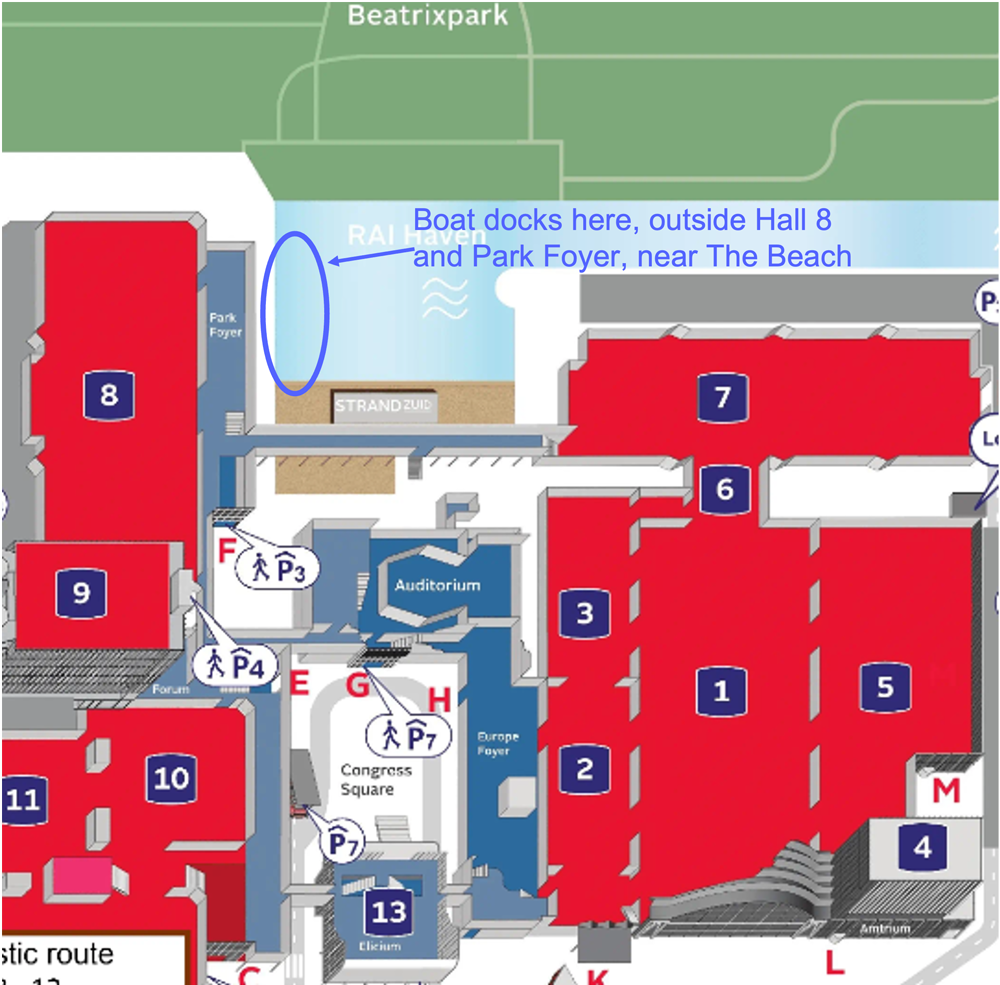
Map to Canal Boat Dock
(Click to enlarge)